About the project

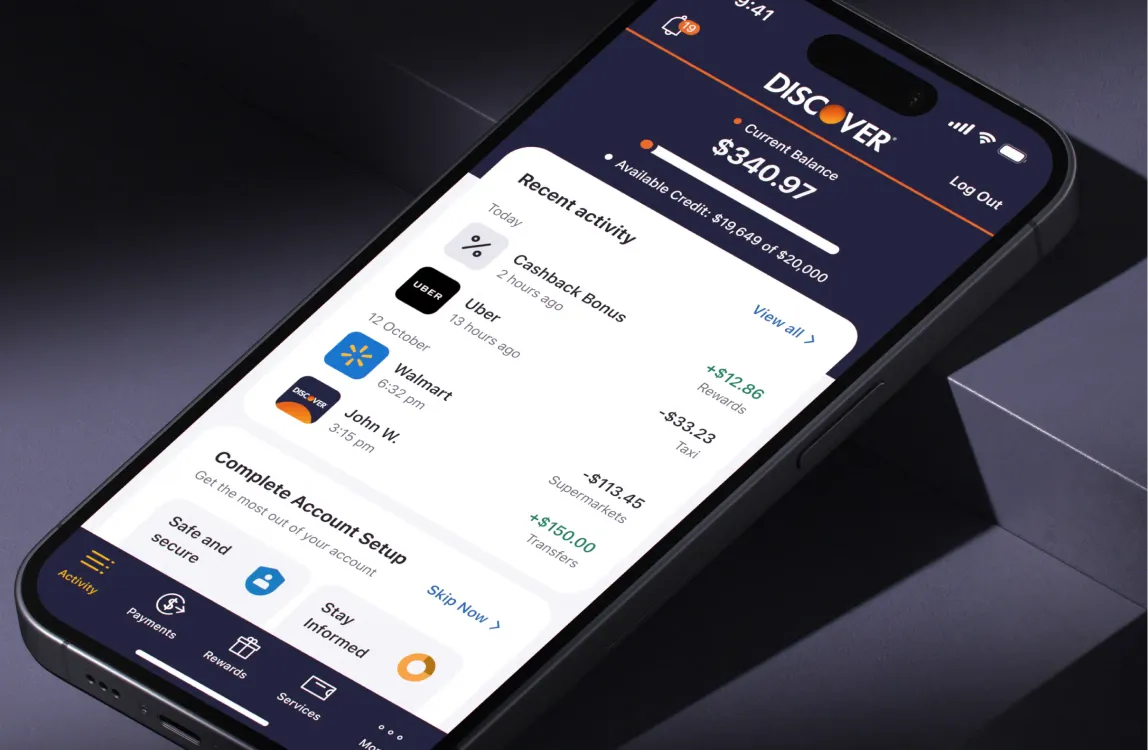
While working as a FinTech UX/UI Designer at the Clay design studio, I collaborated with Discover, a leading US digital bank and payment services provider, to improve the experience of their mobile banking app.
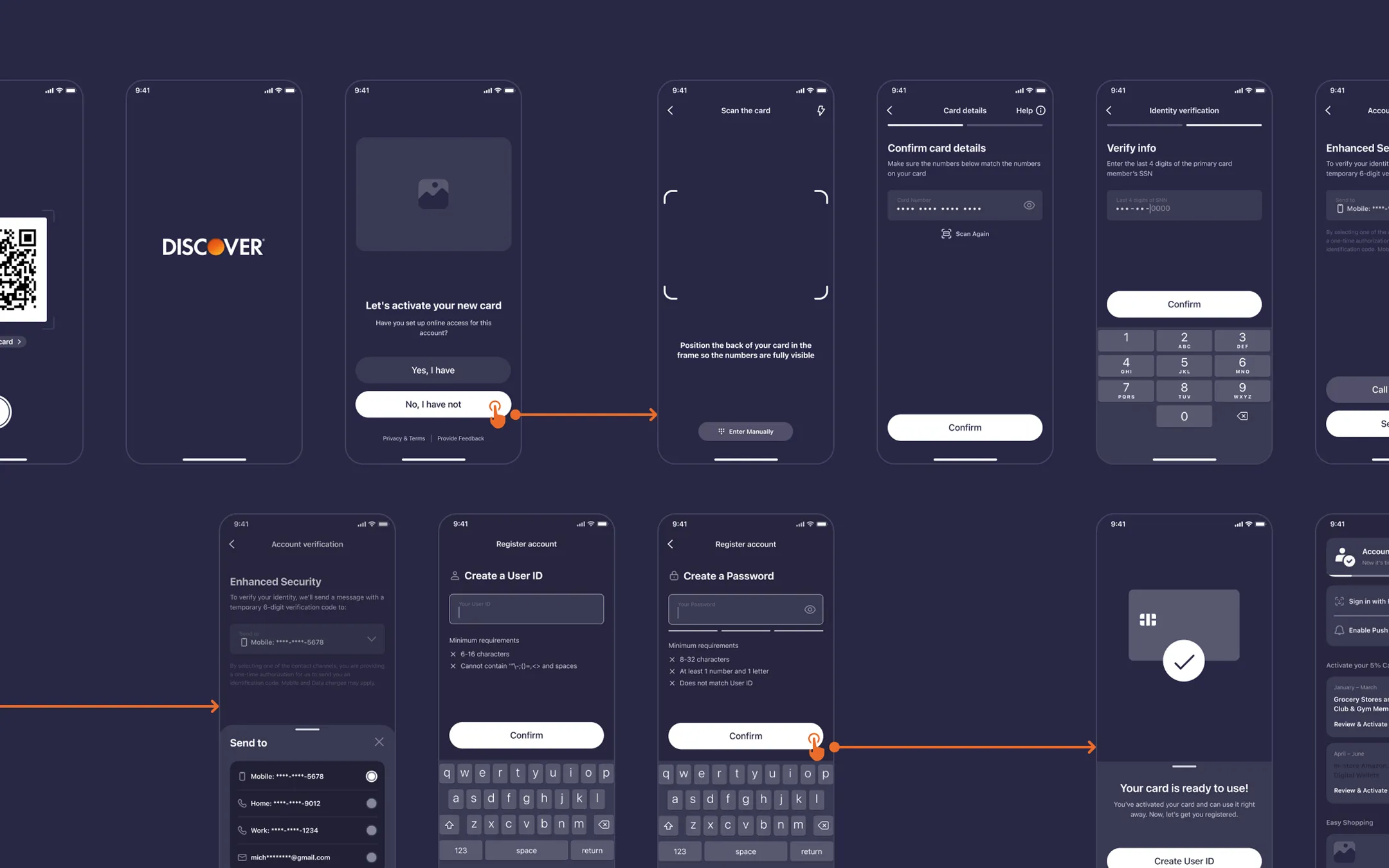
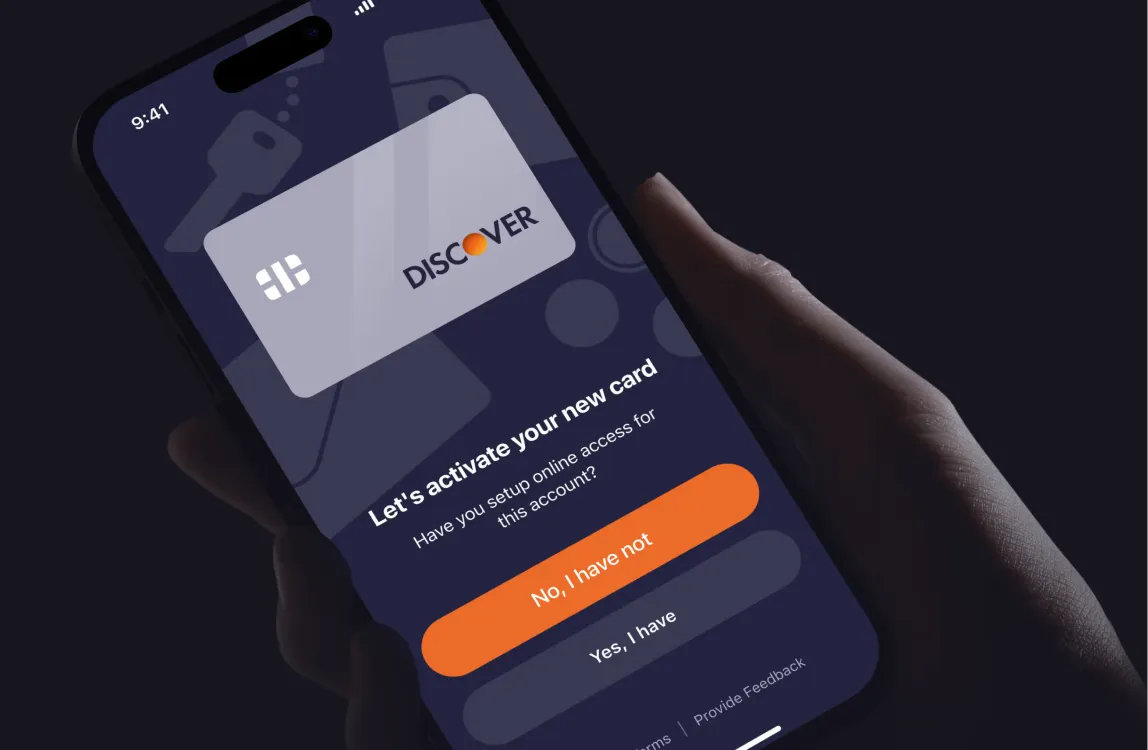
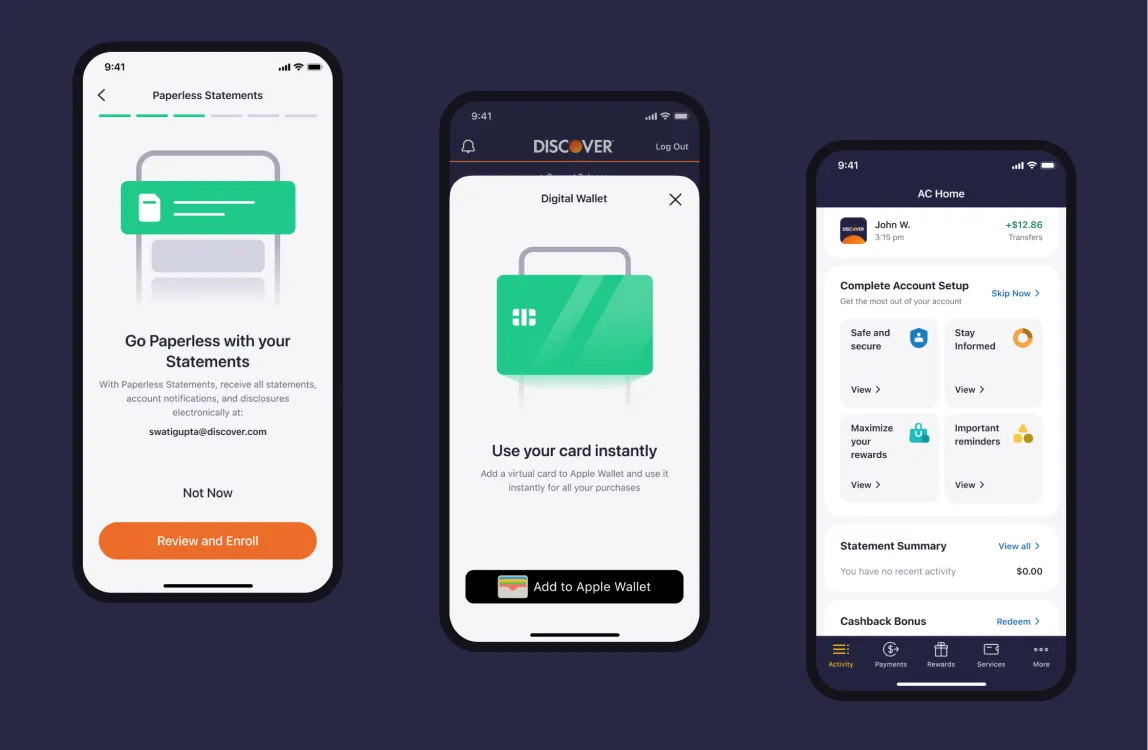
Our work focused on enhancing key customer journeys, as user onboarding and new card activation. In addition, we refined scenarios for activation of 15+ other product features.
The challenges
We held weekly sync calls with Discover’s internal design team, where we presented the latest design iterations, gathered feedback, and refined solutions based on stakeholder comments.
Another key challenge was scope-related. We worked only on specific parts of the application, so the updated designs needed to feel fresh and modern, while remaining fully consistent with the existing app ecosystem and design patterns already used across the product.
What was done
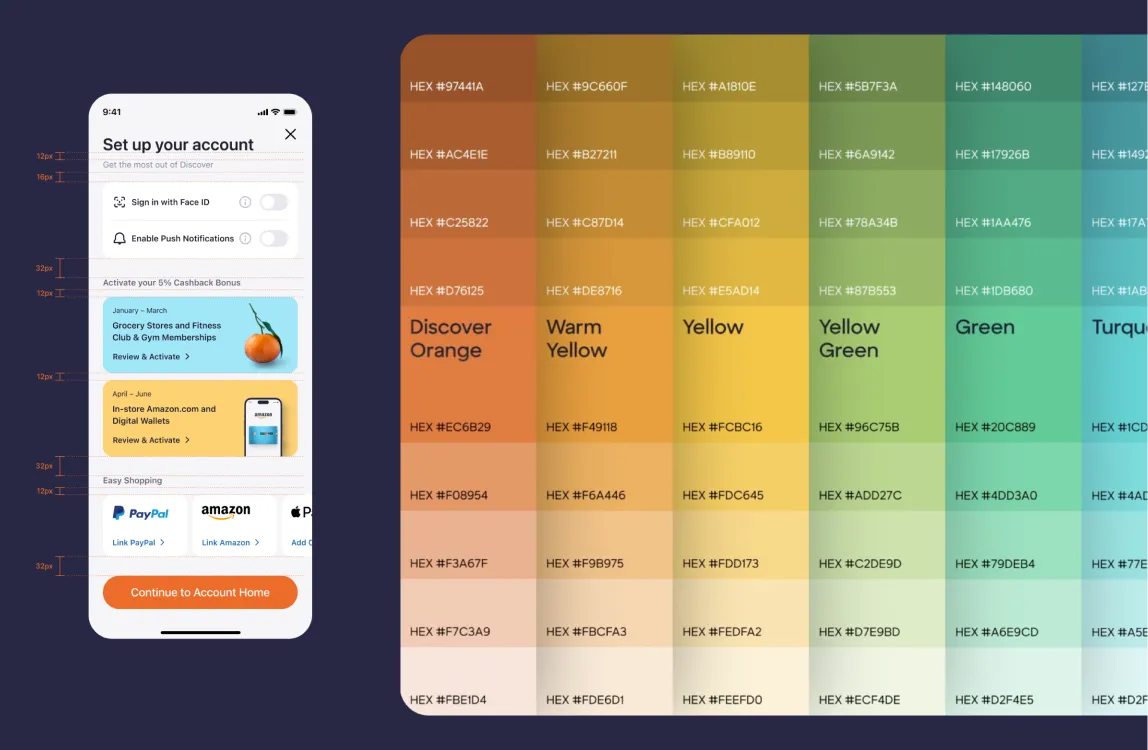
The work was done in parallel across teams. While UX designers focused on low-fidelity prototypes and user flows, the branding team worked on updating the brand color palette.
Once the core user scenarios were approved at a structural level, we moved into visual concept exploration. The interface solutions I proposed for onboarding and feature activation flows were selected and progressed into final production-ready screens.
After defining the visual direction, we designed two onboarding and activation variants with different interaction mechanics. We ran a UX A/B test using clickable prototypes, collected feedback from real users during interviews, iterated on the designs, and selected the variant that received the strongest usability and clarity scores.
Conclusion
As a result, we redesigned the onboarding and new card activation flows based on A/B testing with real users and refined activation scenarios for 15+ additional product features.
We delivered iOS (phone and tablet) and Android screens, along with a structured UI design system, and handed off fully annotated Figma files to the client’s development team.
This project was a valuable experience working with a large-scale financial enterprise, involving multiple approval stages and stakeholder alignment.
During the project, I also temporarily led design execution for two weeks while the team lead was unavailable, presenting updates to the art director and clearly communicating scope and progress for client syncs.