inDrive
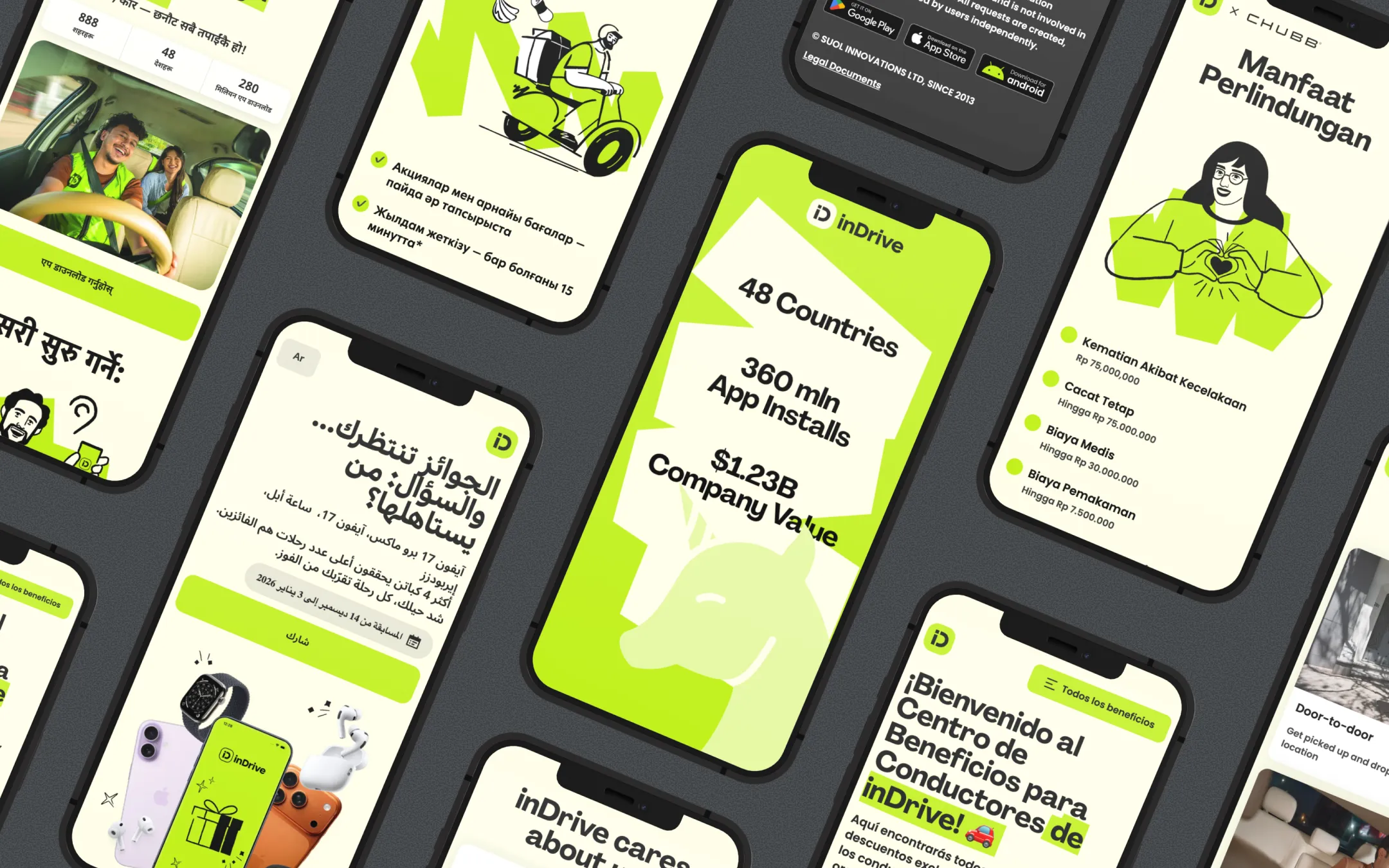
is operating in the fields of ride-hailing, delivery, cargo transportation, and urban services. The app has over 360 million downloads. The company operates in more than 982 cities, across 48 countries.
is operating in the fields of ride-hailing, delivery, cargo transportation, and urban services. The app has over 360 million downloads. The company operates in more than 982 cities, across 48 countries.
Results

Results
30+
Countries
80+
Landing pages
$26,6 mln
Income for 2024
About the project

I work with the inDrive team on launching marketing landing pages and in-app one-page experiences for both passengers and drivers with mobile first approach (≈95%).
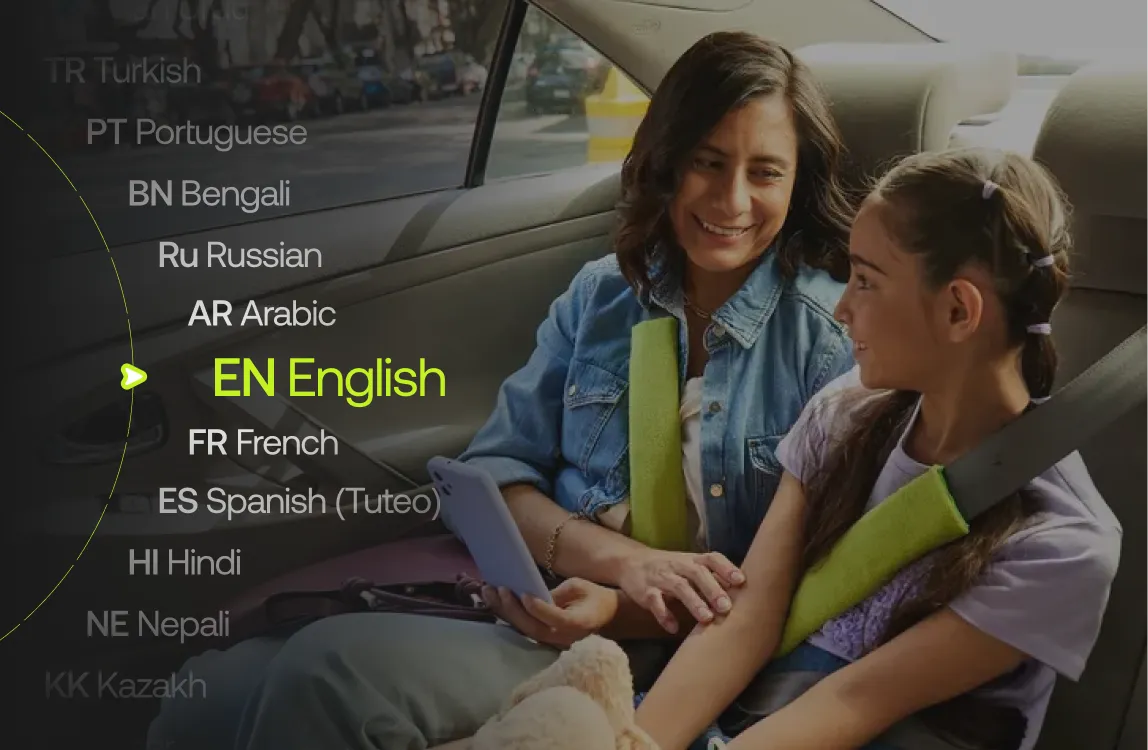
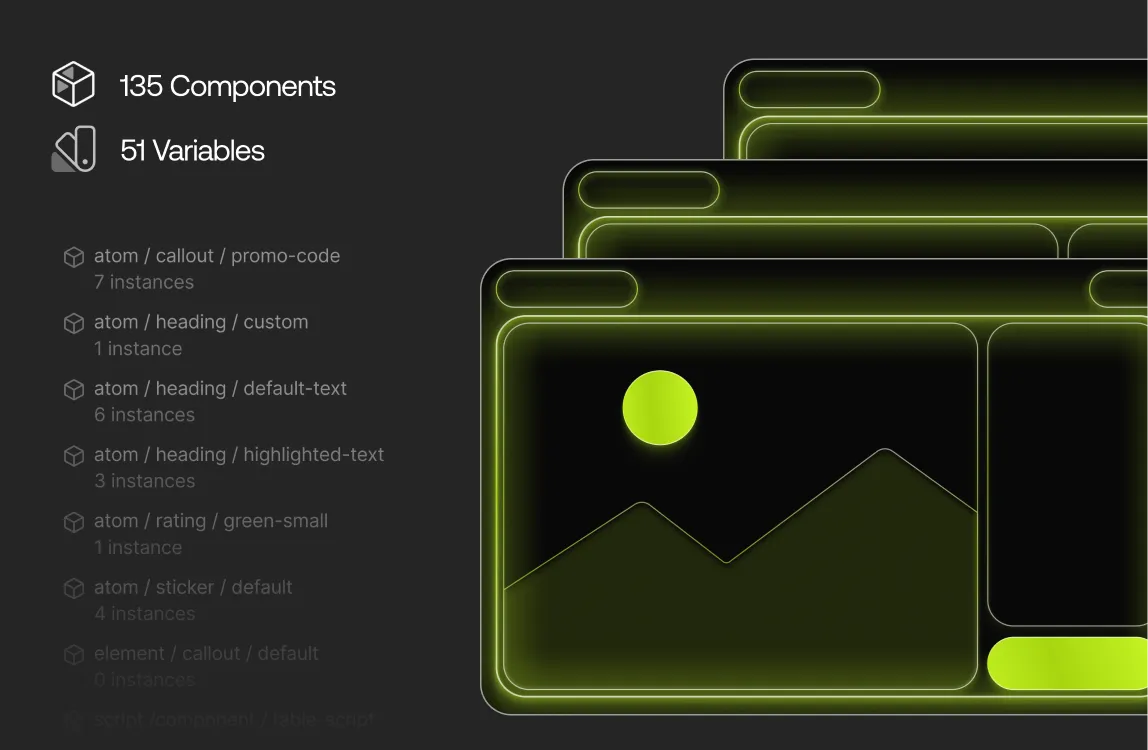
Together with a team lead and another developer, we optimize the Webflow workspace, maintain, and scale a library of customizable components designed for fast rollout across 40+ locales. These pages support multiple languages, including English, Hindi, Arabic, Nepali, Thai, and others.
Thanks to this component-based approach, launching a new landing page now takes from 1 to 4 hours, depending on the number of sections and required localizations.
Together with a team lead and another developer, we optimize the Webflow workspace, maintain, and scale a library of customizable components designed for fast rollout across 40+ locales. These pages support multiple languages, including English, Hindi, Arabic, Nepali, Thai, and others.
Thanks to this component-based approach, launching a new landing page now takes from 1 to 4 hours, depending on the number of sections and required localizations.
The challenges
The main challenges are related to cross-team and cross-region collaboration.
We work with stakeholders from LATAM, MENA, SEA, and other markets, which requires sensitivity to cultural differences, content expectations, and local communication styles in order to keep processes efficient.
Another key challenge comes from Webflow technical limitations.
To address this, we design components that allow sections and elements to be shown or hidden, and use custom attributes to support multiple layout and content variations without duplicating components.
We work with stakeholders from LATAM, MENA, SEA, and other markets, which requires sensitivity to cultural differences, content expectations, and local communication styles in order to keep processes efficient.
Another key challenge comes from Webflow technical limitations.
To address this, we design components that allow sections and elements to be shown or hidden, and use custom attributes to support multiple layout and content variations without duplicating components.
What was done
To keep the shared workspace scalable and easy to maintain, we use the Client-First framework. We also rely on internal guidelines and pre-launch checklists to ensure quality and consistency before publishing.
For continuous improvement, we actively use performance tracking tools, including heatmaps and click maps, to understand real user behavior on landing pages.
Examples of impact-driven improvements:
Case 1 — Visual hierarchy and misclick reduction.
While reviewing pages in Microsoft Clarity and Google PageSpeed, I noticed that excessive use of the brand’s green color on non-interactive elements confused users and caused a high number of misclicks. By refining visual hierarchy and reducing competing accent elements, we improved clarity and interaction accuracy.
Case 2 — Mobile hero section optimization. Around 95% of traffic comes from mobile devices. The original hero block showed an image first, followed by text and a CTA. However, a cookie banner used to cover up to 60% of the screen, so users mainly saw the banner and part of the image. As a result, many users left the page within 2–4 seconds.I reordered the hero section to show text first, which is a widely accepted best practice for mobile UX, and reduced the height of the cookie information banner by 120 pixels through layout and text optimization in collaboration with the UX writer.This change had a positive impact on CR and engagement metrics and became the standard layout for all future landing pages.
For continuous improvement, we actively use performance tracking tools, including heatmaps and click maps, to understand real user behavior on landing pages.
Examples of impact-driven improvements:
Case 1 — Visual hierarchy and misclick reduction.
While reviewing pages in Microsoft Clarity and Google PageSpeed, I noticed that excessive use of the brand’s green color on non-interactive elements confused users and caused a high number of misclicks. By refining visual hierarchy and reducing competing accent elements, we improved clarity and interaction accuracy.
Case 2 — Mobile hero section optimization. Around 95% of traffic comes from mobile devices. The original hero block showed an image first, followed by text and a CTA. However, a cookie banner used to cover up to 60% of the screen, so users mainly saw the banner and part of the image. As a result, many users left the page within 2–4 seconds.I reordered the hero section to show text first, which is a widely accepted best practice for mobile UX, and reduced the height of the cookie information banner by 120 pixels through layout and text optimization in collaboration with the UX writer.This change had a positive impact on CR and engagement metrics and became the standard layout for all future landing pages.
Conclusion
inDrive is a unicorn company with over 340 million app downloads worldwide (around 280 million when I joined the team).
We continuously expand the component library and help stakeholders prepare content in a way that allows them to reuse existing components efficiently, enabling fast launches for markets such as Colombia, Ecuador, Thailand, Nepal, India, Côte d’Ivoire, Angola, Kazakhstan, the MENA region, and others.
It is especially rewarding to see the direct impact of this work at scale and to use the product myself as part of everyday life.
We continuously expand the component library and help stakeholders prepare content in a way that allows them to reuse existing components efficiently, enabling fast launches for markets such as Colombia, Ecuador, Thailand, Nepal, India, Côte d’Ivoire, Angola, Kazakhstan, the MENA region, and others.
It is especially rewarding to see the direct impact of this work at scale and to use the product myself as part of everyday life.